

How Does Laser Engraving Work on Custom Gifts?
A family name on a cutting board, a unit insignia on a dog tag, or a favorite pet’s portrait on slate can begin as a simple idea. But how does laser engraving work well enough to turn that idea into a crisp, lasting piece? The answer is focused light, careful material choices, and a maker’s attention to the smallest details.
Laser engraving is not ink printed on a surface. It is a controlled process that uses a concentrated beam of light to alter or remove material. The result can be subtle and refined, bold and high-contrast, deeply textured, or cleanly marked, depending on the material and the design.
How Does Laser Engraving Work?
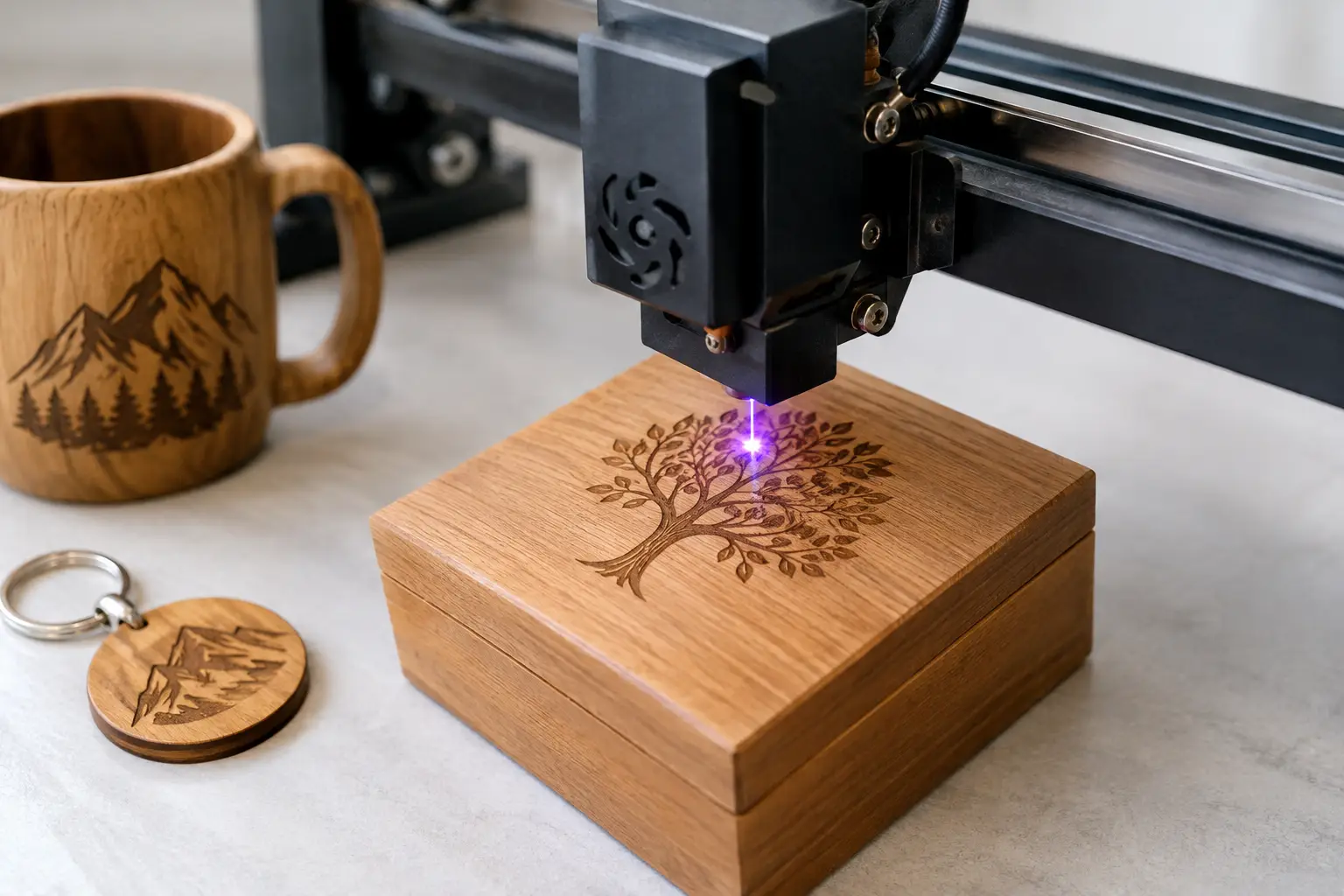
A laser engraving machine directs an intensely focused beam across a material following a digital design. Where the beam touches, heat changes the surface. On wood, that may mean vaporizing a fine layer and leaving a rich, darkened impression. On slate, it gently removes the top surface to reveal a lighter gray mark. On coated stainless steel, it can remove the coating to expose the metal beneath. Each reaction creates its own character.
Before engraving begins, the design is prepared in a digital file. Names, monograms, logos, military insignias, line art, photographs, and custom illustrations all need to be sized, positioned, and adjusted for the piece at hand. A design that looks excellent on a screen may need stronger contrast, cleaner lines, or a different layout before it is ready for a coaster, pendant, tumbler, or cutting board.
The machine reads that prepared file as a map. Mirrors or a moving laser head guide the beam across the work area in precise passes. For filled artwork, the laser scans back and forth in very fine lines, much like building an image one narrow row at a time. For lettering and outlines, it traces the paths of the design. The settings determine how much energy reaches the surface and how quickly the beam moves.
That is where craftsmanship matters. Power, speed, focus, resolution, and the number of passes all affect the final result. Too much energy can char wood, create excessive depth, or soften fine details. Too little may leave an engraving faint or uneven. The goal is not simply to make a mark. It is to create a polished design that suits the material and holds up to real use.
The Laser Does Not Treat Every Material the Same
One of the most interesting parts of custom engraving is that every material responds differently. The same artwork can look dramatically different on maple, slate, stainless steel, or acrylic.
Wood brings warmth and natural variation
Wood is a favorite for personalized cutting boards, keepsake boxes, ornaments, and home décor because the laser creates a naturally warm contrast. The beam removes fibers and darkens the engraved area, giving names and artwork a handcrafted look.
Grain, density, and color all influence the result. A pale, even-grained hardwood often produces cleaner detail than a highly varied board, while knots and mineral streaks can add personality but may affect consistency. For functional cutting boards, placement also matters. Many customers choose a design on the handle, edge, or reverse side so the board remains practical for food preparation while still looking beautiful when displayed.
Slate creates a crisp, elegant contrast
Slate engraving has a distinct look: sophisticated, slightly textured, and naturally suited to coasters, serving pieces, and memorial designs. Rather than burning dark like wood, the laser removes a thin layer of the dark slate surface, revealing a lighter mark beneath.
Because slate is a natural stone, no two pieces are perfectly identical. A small variation in texture is part of its appeal. Fine logos and detailed artwork can engrave beautifully, though very delicate elements should be prepared with enough weight to remain clear against the stone’s natural texture.
Stainless steel offers durable identity
Stainless steel is ideal for items meant to travel, work hard, or carry personal meaning, including dog tags, barware, tumblers, and pendant jewelry. Depending on the equipment and finish, the laser can create a permanent surface mark, alter the metal’s color through oxidation, or remove a coated layer to create a sharp contrast.
Deep engraving into bare metal is a different process than surface marking and may require additional time, specialized equipment, and multiple passes. That distinction matters when choosing a design. A fine military insignia, name, or date may be better served by a clean, high-contrast mark, while a heavier emblem may suit a deeper engraved finish.
From Artwork to a Finished Piece
A successful engraving starts long before the laser fires. First comes the concept: a wedding date, a business logo, a child’s handwriting, a service tribute, or artwork created from a customer’s idea. Then the design is reviewed for clarity and proportion.
High-resolution vector artwork generally produces the sharpest results for logos and line-based graphics because the lines can be scaled without becoming blurry. A good photograph can also be engraved, but it needs a different approach. It is converted into a pattern of light and dark areas, often with adjustments to brightness, contrast, and fine detail. Portraits of people and pets need special care so facial features, fur, and expressions remain recognizable rather than becoming visual noise.
AI-generated artwork can be a wonderful starting point for an original gift, especially when a customer wants a themed image or imaginative concept. It still benefits from a human review. Tiny accidental details, overly thin lines, and crowded backgrounds may need to be simplified so the finished engraving feels intentional and readable.
After the artwork is ready, the material is positioned and focused. Even a small difference in height can affect sharpness, particularly on a curved tumbler or a naturally uneven piece of wood. The engraving is then tested or carefully calibrated to match the design with the material. At Lazer Werkz, that hands-on preparation is what helps turn a personal file or rough idea into a piece with a finished, gift-ready feel.
Engraving, Etching, and Cutting: What Is the Difference?
These terms are often used interchangeably, especially when people are ordering custom gifts, but they describe slightly different outcomes. Laser engraving usually means material is removed to create a visible recessed design. Laser etching typically affects the surface more lightly, sometimes through heat-induced color change. Laser marking creates a permanent contrast on a surface without necessarily creating noticeable depth.
Laser cutting goes further by using enough energy to cut all the way through a material. That is how a flat sheet can become a custom ornament, tag, sign element, or layered décor piece.
In practical terms, the best method depends on the item and the desired look. A dark wood cutting board may call for a warm engraved design. A stainless-steel dog tag may need a precise permanent mark. A layered gift may combine cut shapes with engraved details. The finished effect matters more than the label used during the process.
Why Some Designs Look Better Than Others
The strongest engraved designs respect the limits and strengths of the material. Bold lettering and clean silhouettes are exceptionally reliable across many surfaces. Fine script can be elegant, but it needs enough size and spacing to stay legible. Very small text may look sharp in a digital mockup but become difficult to read once engraved.
Contrast is equally important. A dark design on a dark material may need a different technique, a different finish, or a simplified layout to stand out. Photographs need enough separation between highlights and shadows. A busy logo may need unnecessary background elements removed. These are not compromises in creativity. They are the adjustments that allow the final piece to look purposeful instead of merely possible.
Durability also depends on how the item will be used. A display piece can support delicate detail, while a frequently handled bottle opener, tumbler, or dog tag benefits from a design that remains clear through daily wear. For gifts with sentimental value, choosing the right material is as meaningful as choosing the words or image.
A Few Safety and Care Considerations
Laser equipment should only be operated with appropriate ventilation, enclosure, eye protection practices, and material knowledge. Some materials, including PVC and vinyl, should never be laser processed because they can release hazardous fumes and damage equipment.
For engraved gifts, everyday care is straightforward. Wipe slate coasters clean, hand-wash wooden boards when possible, and avoid leaving wood submerged in water. Periodic food-safe conditioning helps keep wood cutting boards looking their best. Stainless steel items should be cleaned according to their finish and intended use.
The most memorable engraved piece is not always the one with the most elaborate artwork. Often, it is the one that captures the right name, date, emblem, or shared memory in a material made to be used and kept.
Comments